A Top 10 Makeup Brush Factory Tell you How to Produce a Makeup Brush
In this article, we are going to talk about basic makeup brush anatomy, and learn a little bit about the manufacturing process of makeup tools.
First of all, let's take a closer look at a makeup brush's appearance and the process of makeup brush creation. Basically, all brushes, high-end or cheap drugstore brushes are made in the same way. The only thing that differs from brand to brand is the quality and origins of the materials they use in production, and the parts it is made of hairs,ferrules and handles.
The Makeup Brush Anatomy
Can you believe that every makeup brush out there is handmade? Synthetic or natural, cheap or high end, high quality or low — all brushes are made by hand, and though they are unique! People who work in the brush factory pay very special attention to every step of the production process. It starts with hair preparation — a worker needs to gather, comb and mound hairs together.
The next step in makeup brush manufacturing is to carefully insert bristles into the ferrule. Then the ferrule is pressed by a special pressing machine. To make sure that all makeup bristles are going to stay put, they are glued together with glue, After, a makeup brush handle is added to the ferrule, ready to be packed and distributed.
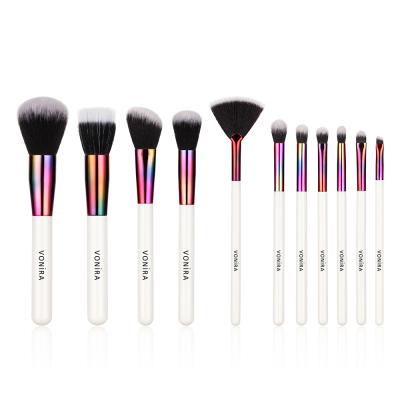
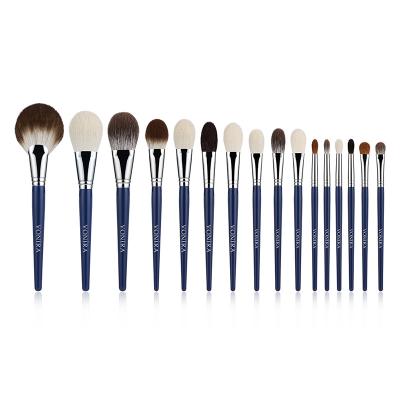
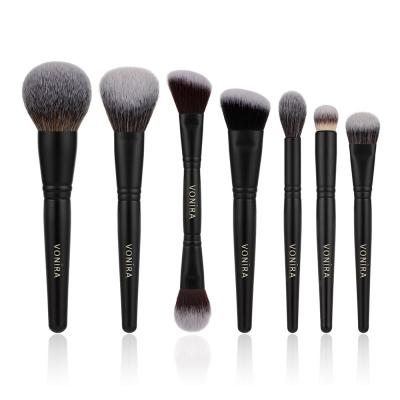
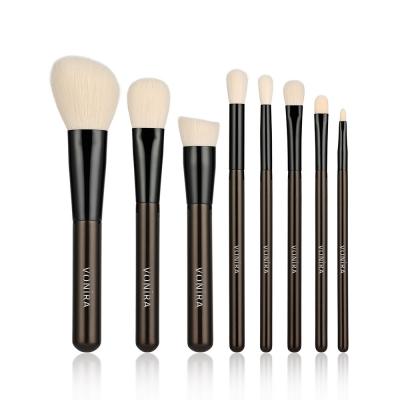
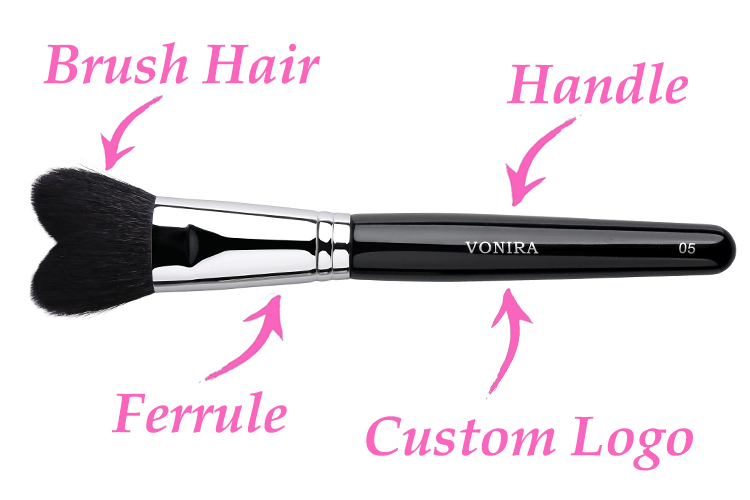
Every makeup brush's anatomy consists of three main parts: a handle, a ferrule, and head. These parts can be made of different natural and synthetic materials, but they are always the most important element in the structure, that makes the makeup brush tool work. Depending on the quality of the production, the makeup brush can be made out of more parts, but the most important here is how it is made.
Generally speaking, makeup brush consists of three main parts as below description:
1.Brush Handle
It’s a part that is used to hold a brush. A handle can be wooden, plastic, or even metal. The size of the handle can be very different, depending on the manufacturer and the type of brush. Usually, eyeliner brushes have longer and thinner handles, sometimes angeled. This allows makeup artists or makeup beginners to keep a better balance while they apply makeup, without shaking their hands.
Kabuki and some contouring brushes have shorter handles and this allows to have better control over the brush. Brands and manufacturers use handles to express their imagination and sometimes they create a real masterpiece on this part of a brush.
The most common handles are plastic handles, metal handles and wooden handles:
1. (PLA or ABS)Plastic or Acrylic Handles
The molds are developed and handles are produced on bulk level. Then the handles go through the painting process and kept to dry. When the handles are dry and paint is perfect, here comes the logo painting or engraving process.
2. Wooden or Bamboo Handles
First of all the wood is cut according to the required shape. Wood requires special painting so first primer painting process is fulfilled and then the final coating of paint is made. Like plastic handles these handles are also dried for logo printing or engraving brand name of makeup brush manufacturers.
3. Metalic Handles of Aluminum & Copper
In new trend,metal handle is also popular now due to its not easy broken in water roughly washing which compared with wooden handles,also metal handle color be more metalic,can keep handle and ferrule in same perfct same color designs.
2.Brush Ferrule
It’s a metal tube that holds the hairs and bristles of a brush, and connects them with the brush handle. The ferrule is usually made of light metals: brass, copper, aluminum, or plastic. Ferrule should perfectly fit the head and the handle of the brush, otherwise the bristles will fall out. Ferrule`s heel is a part where the tube gets narrower, it presses and holds all the hair tightly together. A special glue is also used to secure the hair in the ferrule. A part where the ferrule connects with a handle calls crimp.
3.Brush Head(Hair or Bristles)
It’s the actual hairs or bristles of a brush. Many types of hair are used for makeup brushes.
In general, there are two types of brush hair. One is synthetic hair and second is animal hair. It depends upon the user requirements that this brush is going to be used for.
Animal hair:goat or squirrel, pony hairs, by carefully cutting or even picking the fallen hairs (cruelty-free production).
Synthetic hair:Nowadays more and more brands prefer to use synthetic materials over natural hairs. Special man-made materials are not worse than natural hair. These materials are nontoxic, have a very soft and smooth texture, and sometimes last longer than natural hair. The most common materials used for synthetic makeup brushes are polyester. nylon and taklon.
A qualified makeup brush, while production on a factory goes through more than 120 steps but this article is just a basic sketch to provide you a general idea of production.
1.COMBING HAIRS
Combing hair refers to the act of combing or brushing hair to remove excess product, dust, and other particles from the hair. During this process, the bristles of the makeup brush are dragged through the hair, which removes any excess product and leaves the hair looking clean and fresh.
2.MOUNDING HAIRS
Placing a mass of hair into a mold, making the desired shape.The strands are then pulled through small openings in the mold and forced together, forming a mound.
3.INSERTING HAIRS
Inserting hairs into the ferrule,the hair is carefully wrapped around the bristles, creating a more voluminous brush.Finally, the new hairs are secured in place with hair glue.
4.SQUEEZING FERRULE
Squeezing the ferrule or the brush’s handle. It creates a tight fit between the bristles and the handle, ensuring that the bristles are held firmly in place.
5.MEASURING
Hair measuring ensures that the size of the hair outside the ferrule remains consistent. This is to avoid any inconsistencies in how the brush will apply makeup and provide a level of quality across all brushes. Hair that is too small or too big can cause brushes not to pick up enough product, resulting in the inaccurate application.
6.DIPPING GLUE
Dipping glue (drop given glue into the ferrule to fix hair and ferrule),it prevents brushes from shedding hairs and bristles.
7.HANDLE ASSEMBLING
Glue the handle and FERRULE together,it ensures that the makeup brush handle is durable and functional
8.INSPECTION
Bristles must be soft, pliable, and have a round shape; handle is appropriately attached to the brush.
The Custom Private Label 5 Most Important Process
1.Choose proper brush model
There are many brushes types: such as concealer brush, powder brush, blush brush,eyeshadow brush. We should know what specific brush we need before customizing.
2.Choose proper brush ferrule
The ferrule is what connects the handle to the brush head.
Aluminium is the more common material used as it is cheaper and more easily shaped. Copper or Brass ferrules lo
ok more elegant and it’s is stronger.While the cost will be also higher.
If you want it premium touch feeling, please choose cooper;if you make it economic, please choose aluminum which is easy for production.
3.Choose the brush hair material
Makeup brush bristles can be made of animal hair or synthetic fibres (or a mix of the two).
Traditionally, natural fibres from animal hair are used with powder based makeup products as the porous nature of these fibres are able to easily “grab” the product.
Synthetic fibres have always been considered best for gel, liquid and cream makeup products. Common synthetic fibres do not have a cuticle, therefore are very smooth and trap less product than animal hair, ensuring that product is not wasted through absorption into the bristles.
Nowadays synthetic fibres are just as good at “picking up” powder products as any natural hair and what most important they are vegan friendly & cruelty-free.
4.Choose brush handle
The handle is an important part of the brush as it allows the user to grip the brush comfortably.It's where any brand logo, brush code, brush description or other information about the brush can be printed.
The handles are mainly made from wood, plastic or metal.
Plastic handles can be produced in various shapes, sizes & textures however, this requires mold development, which means high volumes.For small quantities,wooden handles will be more cost-effective options.
5.Choose logo method
There are many ways to print a logo on makeup brushes. The most common are: pad printing, silk screen printing, hot foil stamping, laser engraving.
Pad printing and silk screen can be made in different colors, they look the same.
Hot stamping is more expensive,and color are limited to the available metallic foil.Most popular are gold, silver, rose gold colors.
Laser engraving is normally for the logo placed on the metal ferrule.
How to Customize Makeup Brush
Let's share you the detailed commercial step if you choose a reliable manufacturer to produce your own label brush for you.
For your brush custom private label order process, we need below information:
a.Brush models & quantity
b.Your logo design art PDF & AI format files
c.Brush handle shape and color
d.Brush ferrule color
e.Logo color on brush handle,For Ex.,logo way is silk printing or hot foil stamping
d.Customizing packaging if have
FAQ for Private Label Makeup Brushes
FAQ about the high quality makeup brush supplier and its products, and the services of custom makeup brushes, private labeling, pricing, lead time, quality, shipment. For any other questions or inquiries, please contact sales@vonirabeauty.com
Parts A: PRODUCTS & ORDERS
1:Where is your factory?
We have our own makeup brushes manufacturer in Cangzhou & Changsha City of China.
Also Guangzhou and Dongguan, which is the world's manufacturing capital for color cosmetics and makeup brushes.
2:What are your MOQ?
Ready stock: No MOQ.
New models:around 300 pieces.
3: What is the average lead manufacturing time?
Sample orders 7 days
Mass production 20-30 days(from received of deposit&approval)
If it is urgent, we will arrange the order as priority and offer the accurate lead time after confirming the orders.
4:Do you offer vegan makeup brushes?
Yes, we offers wide selection of vegan makeup brushes.
For the synthetic hair, We are able to make adjustment(hardness, softness, touchy feeling) per different application and requirement.
5:Do your products test on animals?
We do not test on animals and do not condone any. We are committed to providing high quality products that are free from animal testing. Animals are never harmed during the manufacturing process.
Parts B: PRICE & PAYMENT
1:What is price range?
We design and manufacture makeup brushes to your exact specifications and standards, so the products are customized and the costs depend each brush size and material using. To give you an idea generally our face brush costs 0.75-4.5USD, while eye brush and lip brush cost US$0.32-US$1.75 per unit about. To make an enquiry or to receive a quote for your brush, please contact us with as much information as you can and a representative of our sales team will contact you.
2:What is the payment terms?
Sample orders –(Paypal) 100% Full Payment
Ready Stock –(Company Bank TT Transfer) 100% Full Payment
Customized Order –(Company Account TT Transfer) 30% deposit in advance, 70% balance after final inspection before shipment.
3:Is the payment safe?
For sample payment we accept Paypal. PayPal is generally safe, especially for buyers. For bulk payment we accept bank TT transfer to our import and export right company bank account, which is recognized by the government.
Parts C: QUALITY
1:Can you provide the relevant documentation?
Yes, we provide all the necessary and required documentation including Certificates of Analysis / Conformance; Insurance; Origin, and other export documents such as Customs Commercial Invoice and Packing LIst.
2:What is your quality control processes?
Our QC team do raw material inspection, on-spot random inspection, semi-finished product 100% inspection, finish goods inspection. We accept third-party inspection booked by customers themselves.
3:What is your returns policy for faulty items or poor quality production?
We will replace all faulty items or defected products at our cost if happen.
4:Do you have a customer portfolio–if so,can we see some of the companies who you work for?Yes. we can send you some photos for your reference for the without logo side and confirmation,but for some it is completely confidencial,for we signed non disclosure agreement files.
Parts D: DELIVERY
1:How do you ship to my country and what would be the shipping cost (both for sample and bulk)?
Generally by sea for large volume, by air / express for small volume including samples. But it is up to you. For sample shipment it costs approximate USD 35.0 via DHL or Fedex. For your trial order as the goods volume won’t be so large, we suppose, it can go by Air or an Courier. So when you decide on the packing / packaging, we'll be able to calculate the volume and consult a forwarding agent to see how much the freight will be.